

Academic research
Fieldwork highlights on shame and guilt across four continents
Giorgios Bouronikos presents a cross-cultural research programme. The work draws on a doctoral investigation focused on shame indicators. The study uses a multimodal approach, examining what participants say, how they say it, and how speech co-occurs with gaze, face, posture, movement and physiological signs.
The purpose of the fieldwork was to understand how shame is communicated in real human interaction, not only in theory. The five expeditions opened an international dialogue with local participants, cultural mediators, professionals, community leaders and researchers. The findings support better practice in coaching, counselling, professional interviewing, conflict management and intercultural communication.
1/ COLOMBIA
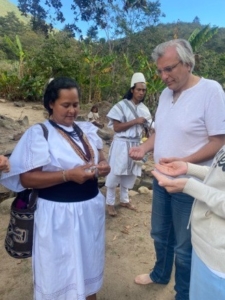
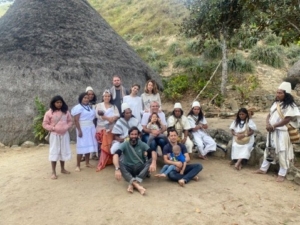
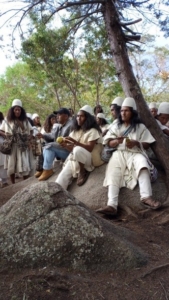
The Colombia expedition connected academic fieldwork with cultural dialogue in Santa Marta, the Sierra Nevada de Santa Marta and Brisas del Pance, south-west of Cali. This fieldwork was especially important for the shame study because it brought the research into conversation with Indigenous perspectives and local understandings of emotional life.
Research highlight
Preliminary conversations with Mamos, community representatives and local contacts helped the research team approach shame in a culturally respectful way. Rather than assuming that one English word would carry the same meaning everywhere, the project examined how experiences related to shame, dignity and social responsibility are expressed in local contexts.
Marketing message
Colombia illustrates the Institute’s commitment to respectful field research. The work shows how emotion research can benefit from listening to community knowledge before analysing individual narratives.
Link with shame research
The shame fieldwork in Colombia showed how emotional experience can be tied to community belonging, moral learning and the restoration of relational balance.
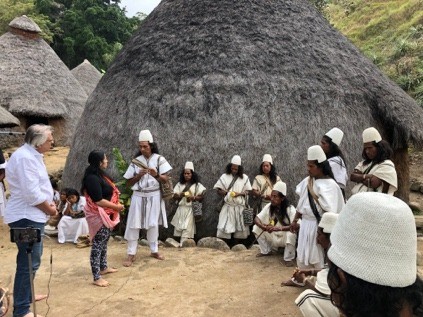
Santa Marta fieldwork: community meetings and interviews on shame and guilt-related emotional experience.
2/ MONGOLIA
The Mongolia expedition took place across different cultural settings, including Dundgovi, Karakorum and Ulaanbaatar. The fieldwork explored how shame is shaped by social hierarchy, family expectations, respect for elders and collective responsibility.
Research highlight
The shame study identified a recurring pattern in which emotional discomfort was communicated through hesitation, lowered gaze, self-soothing gestures, laughter used as a mask and careful narrative reformulation. These indicators did not operate in isolation; they appeared together as part of a wider pattern of concealment and emotional regulation.
Marketing message
Mongolia demonstrates the value of going beyond laboratory observation. The fieldwork shows how culture, place and social hierarchy influence the way people speak about difficult emotional experiences.
Link with shame research
The Mongolian material contributes to show how shame may focus strongly on the self in relation to others, especially when authority, family reputation or communal expectations are involved.
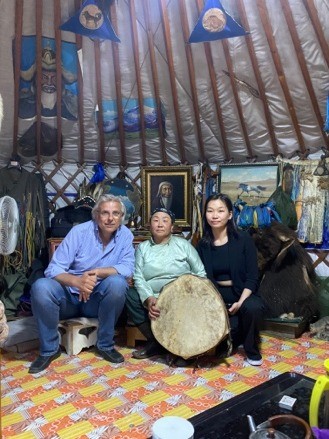
Ulaanbaatar: interviews and cultural meetings
3/ SOUTH AFRICA
The South Africa expedition provided a shared field context for the shame project. It offered rich material on the social, moral and relational dimensions of emotional experience.
Research highlight
In the shame study, South African narratives highlighted threatened dignity, moral judgement, family disappointment and community responsibility. Shame was often expressed through hesitation, reduced verbal output, weakened or unstable voice, gaze aversion, self-soothing body movements and visible arousal.
Marketing message
South Africa shows how the Institute’s research can connect emotional expression with real social life: family, community, belonging and moral repair. The findings are relevant for coaching, counselling and professional conversations where trust and sensitivity are essential.
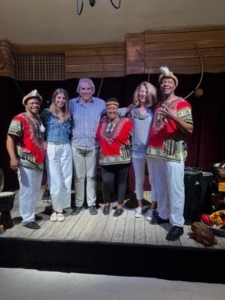
4/ UNITED ARAB EMIRATES
The United Arab Emirates expedition provided an important Middle Eastern field context for exploring honour, dignity, modesty, responsibility and emotional control.
Research highlight
The shame related-data from the UAE showed a consistent pattern of verbal minimisation, paralinguistic softening and behavioural withdrawal. Apologising and avoiding eye contact were interpreted in relation to communal norms of honour, modesty and family reputation.
Marketing message
The UAE expedition highlights the Institute’s capacity to study emotion in culturally sensitive, professionally relevant settings. The findings support better understanding of how dignity, responsibility and social expectations shape communication.
5/ LUXEMBOURG
The Luxembourg expedition provided the European field context for the doctoral project. It is also closely linked to the Institute’s professional environment and its applied interest in coaching, behavioural analysis and human development.
Research highlight
In the shame study, Luxembourg participants tended to manage shame through discretion and composure. Shame was often encoded indirectly through fillers, humour, distancing, lowered intensity, pauses, stillness and gaze aversion.
Marketing message
Luxembourg anchors the research programme in a multilingual European setting. It demonstrates how the Institute combines academic rigour with applied human development, helping professionals recognise subtle emotional signals with care and precision.
OVERALL CONTRIBUTION
Across the five expeditions, the research indicates that shame cannot be understood through one signal alone. They are best approached as multimodal patterns, where language, voice, facial expression, gaze, posture and social context work together. Shame appears strongly connected with concealment, withdrawal and the management of social exposure.
For the International Institute for Research and Human Development, these findings create a practical bridge between academic research and professional application. They support the development of training, coaching and research tools that help people recognise emotions more accurately, communicate more ethically and respond to sensitive narratives with dignity.
Source note: Text prepared from the doctoral these: Georgios Bouronikos, Identifying “shame” indicators through verbal and non-verbal behavioural responses. The website photographs are the images provided in the original research document.